
Useful light
The distribution supports detecting pedestrians at and approaching the crossing from relevant driver directions instead of maximising lumens outside the area that matters.
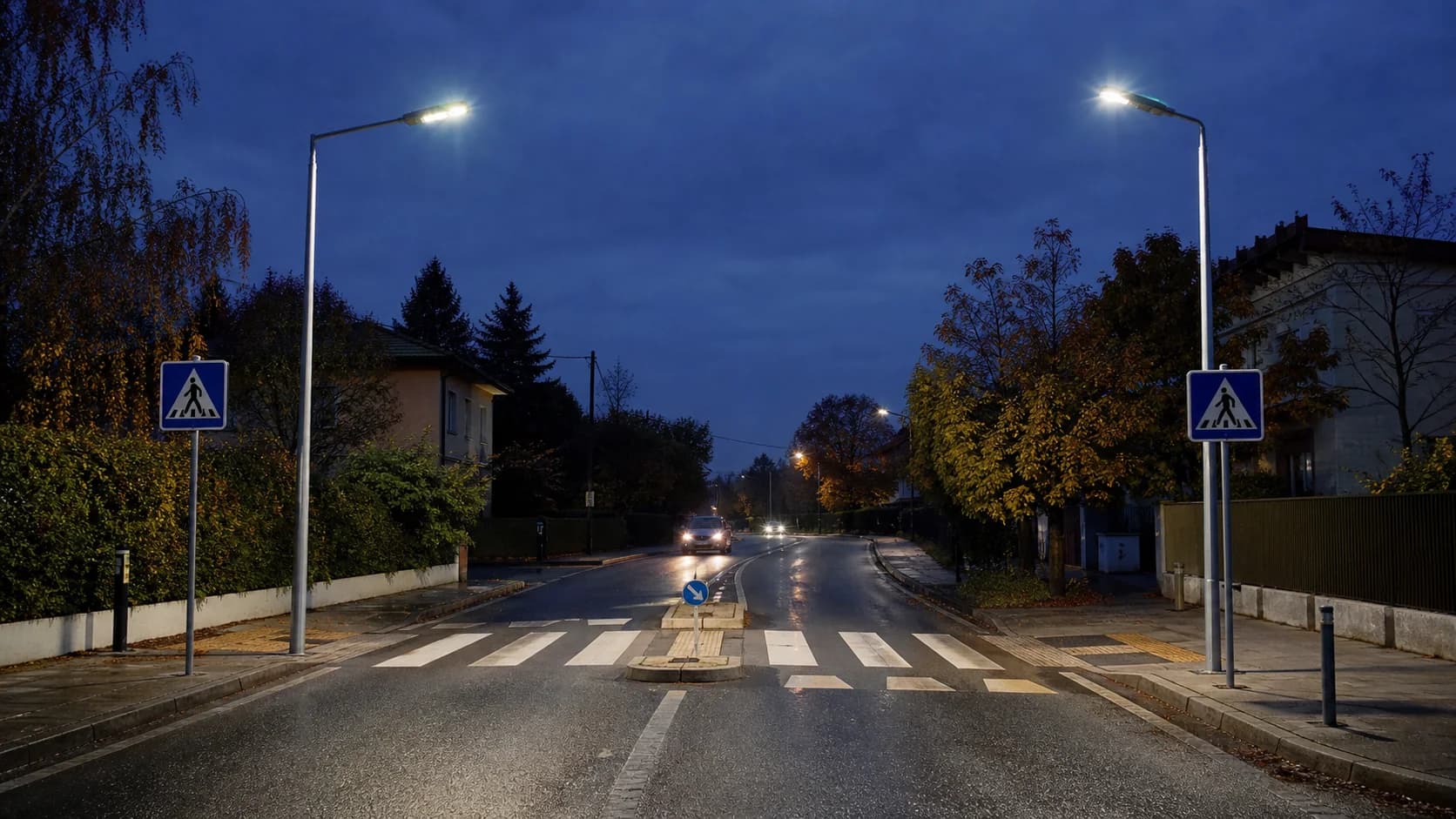
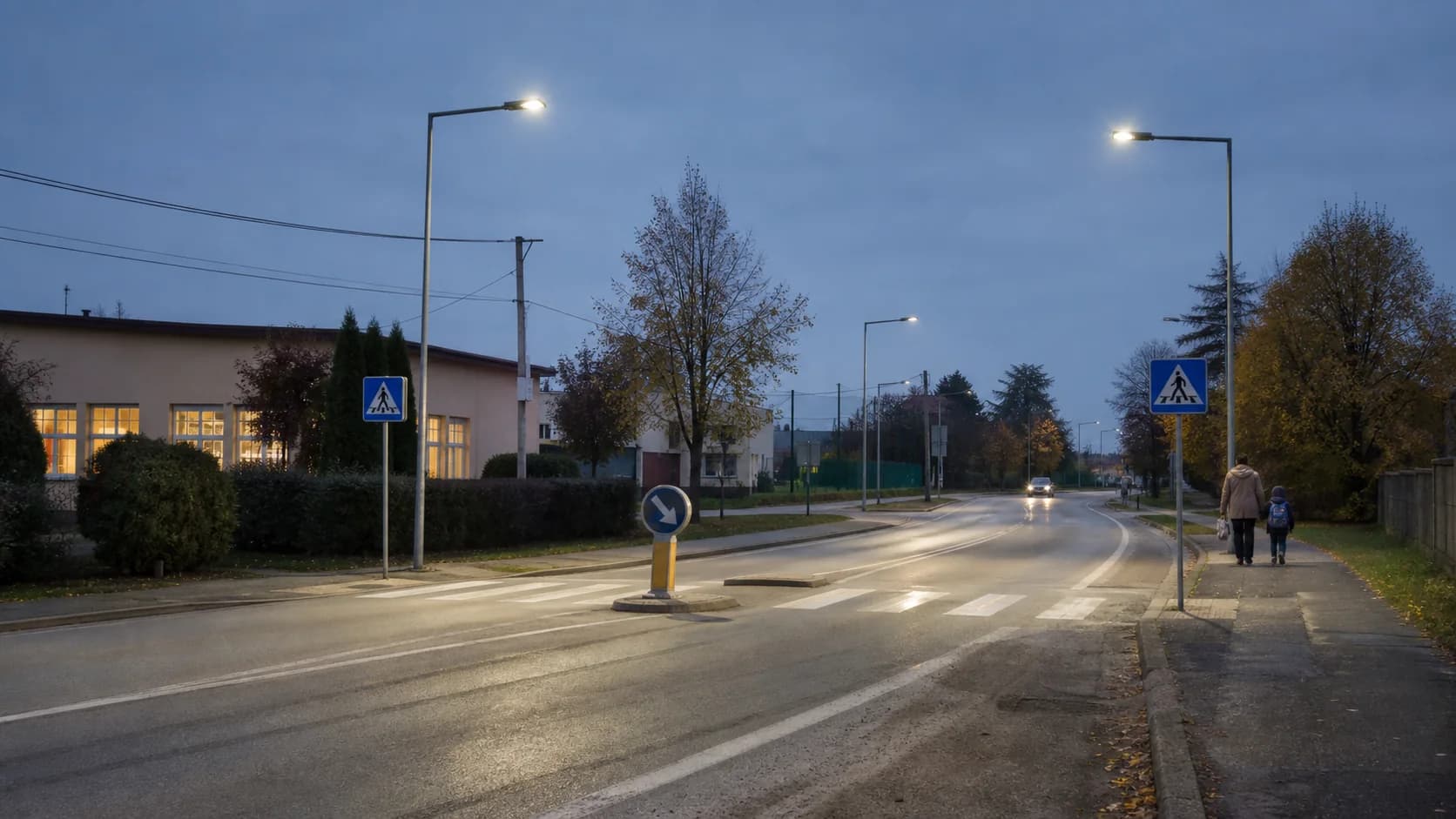
Pedestrian crossing lighting is a site-specific treatment intended to improve the visibility of people at and approaching a crossing. It must coordinate contrast, approach directions and the surrounding road lighting.
Application pages
Start by confirming the site types that belong on this path and the cases that need a different solution.
Road and public-space lighting
A useful specification balances visual performance, reliability, operating cost and the realities of installation.
The distribution supports detecting pedestrians at and approaching the crossing from relevant driver directions instead of maximising lumens outside the area that matters.
Position, optics and aiming account for users and approaching drivers, pedestrians and road users beyond the crossing.
Controls, environmental conditions and maintenance access are part of selection rather than an afterthought after pricing.
The result connects targets, visible assumptions, the proposed variant and evidence the project team can check.
Commercial investigation · road lighting
These are the decisions that shape fixture selection, photometric work and the final quote assumptions.
| Design criteria | Design approach |
|---|---|
| Authority brief | Confirm the responsible authority, applicable method, road class and required treatment before selecting equipment. |
| Approach geometry | Document lanes, direction, speed context, crossing width, refuges, curvature and driver observation distances. |
| Pedestrian visibility | Assess vertical or contrast-based requirements on the pedestrian and approach zones, not horizontal lux alone. |
| Pole side and optic | The mounting side, setback, height and verified asymmetric photometry must work together for each approach. |
| Surrounding system | Coordinate road luminaires, signals, signs, trees and background brightness so the treatment does not create a new glare hazard. |
Design criteria
Use these comparisons to narrow the system direction before choosing an individual model.
Design criteria
Applicable targets depend on the country, site and project class. Final compliance must be checked against the current project brief and calculation.
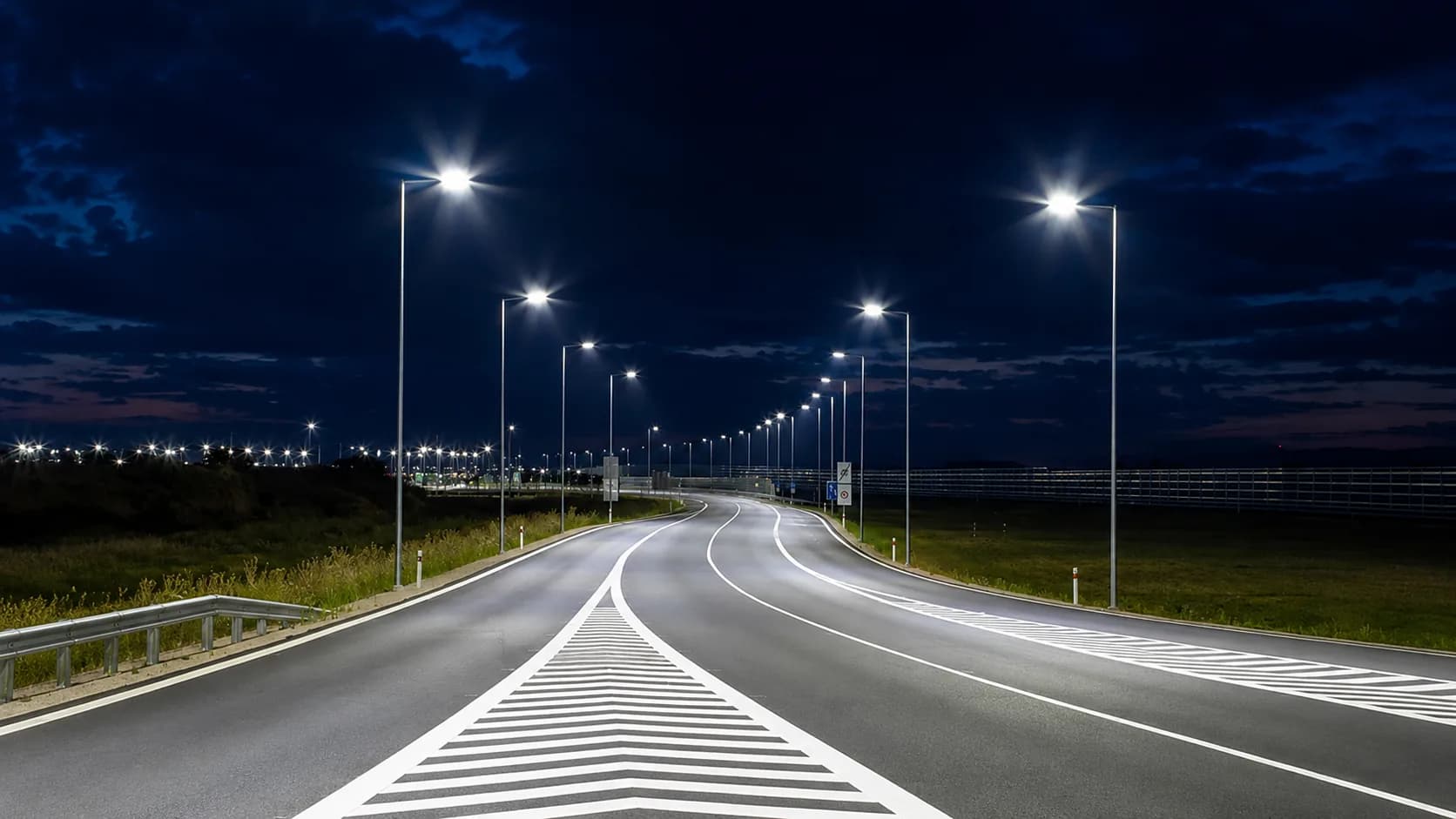
A road-lighting route for public and private infrastructure where classification, pole geometry and optical distribution set the performance of the system.
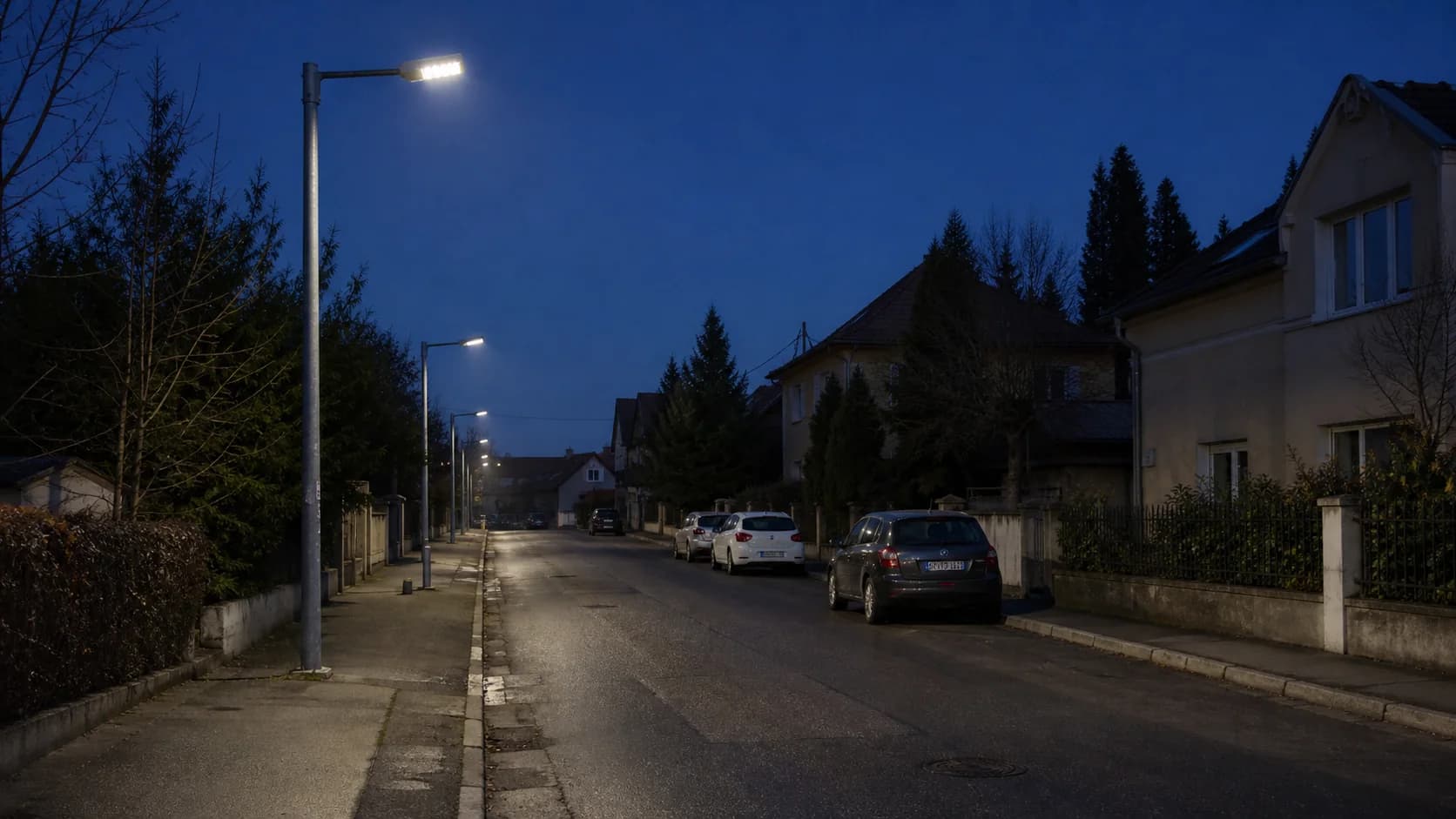
A modernisation route that audits existing poles, circuits and lighting performance before testing whether one-for-one LED replacement meets the required class.
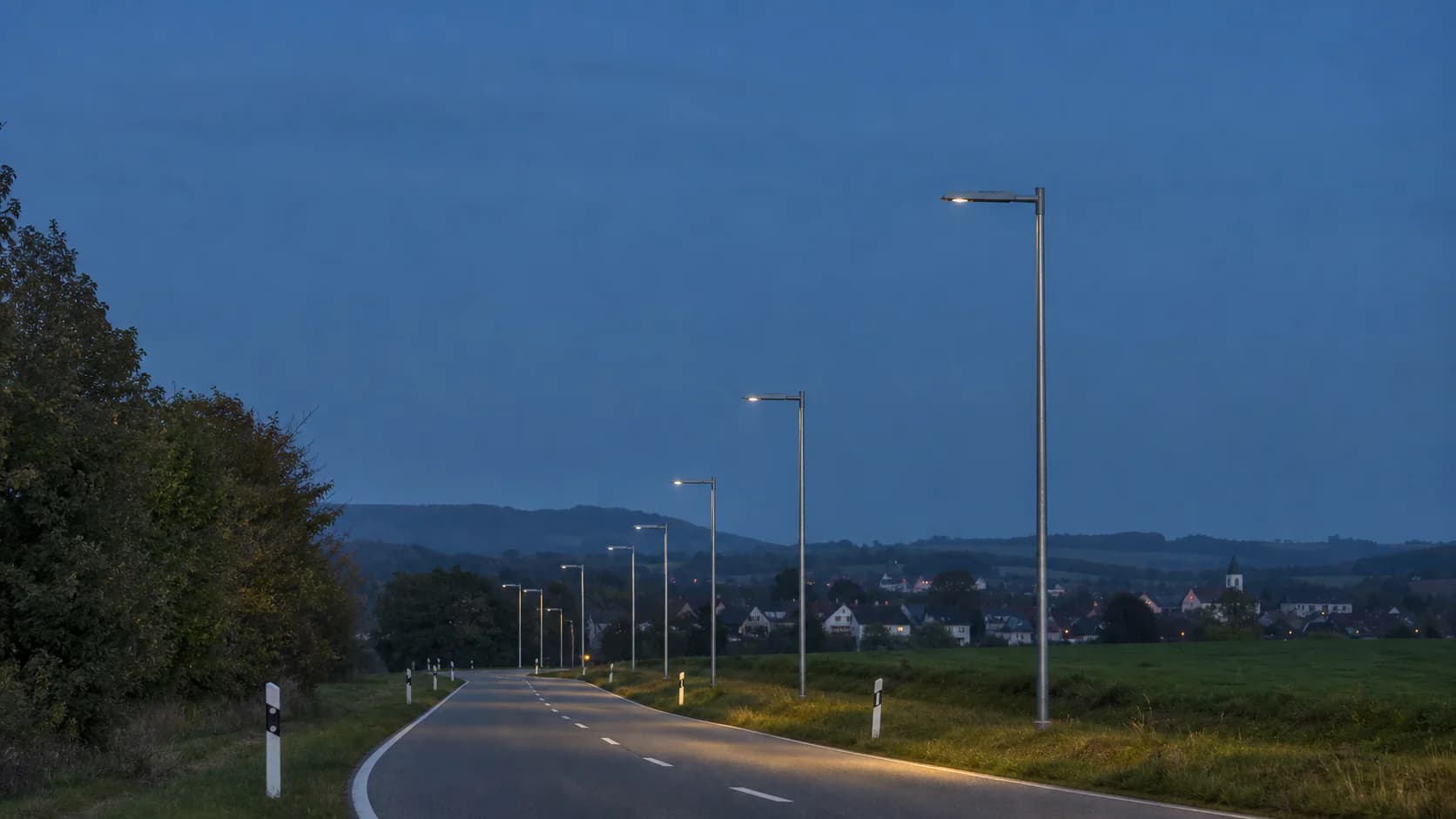
Road lighting for sites without practical grid access, sized from road performance and the location-specific winter energy balance.
FAQ
A design and qualification route for crossing visibility. Product suitability remains conditional on verified asymmetric optics, photometric data and the responsible authority's brief.