
Useful light
The distribution supports tracking a fast ball against the playing surface and surrounding background instead of maximising lumens outside the area that matters.
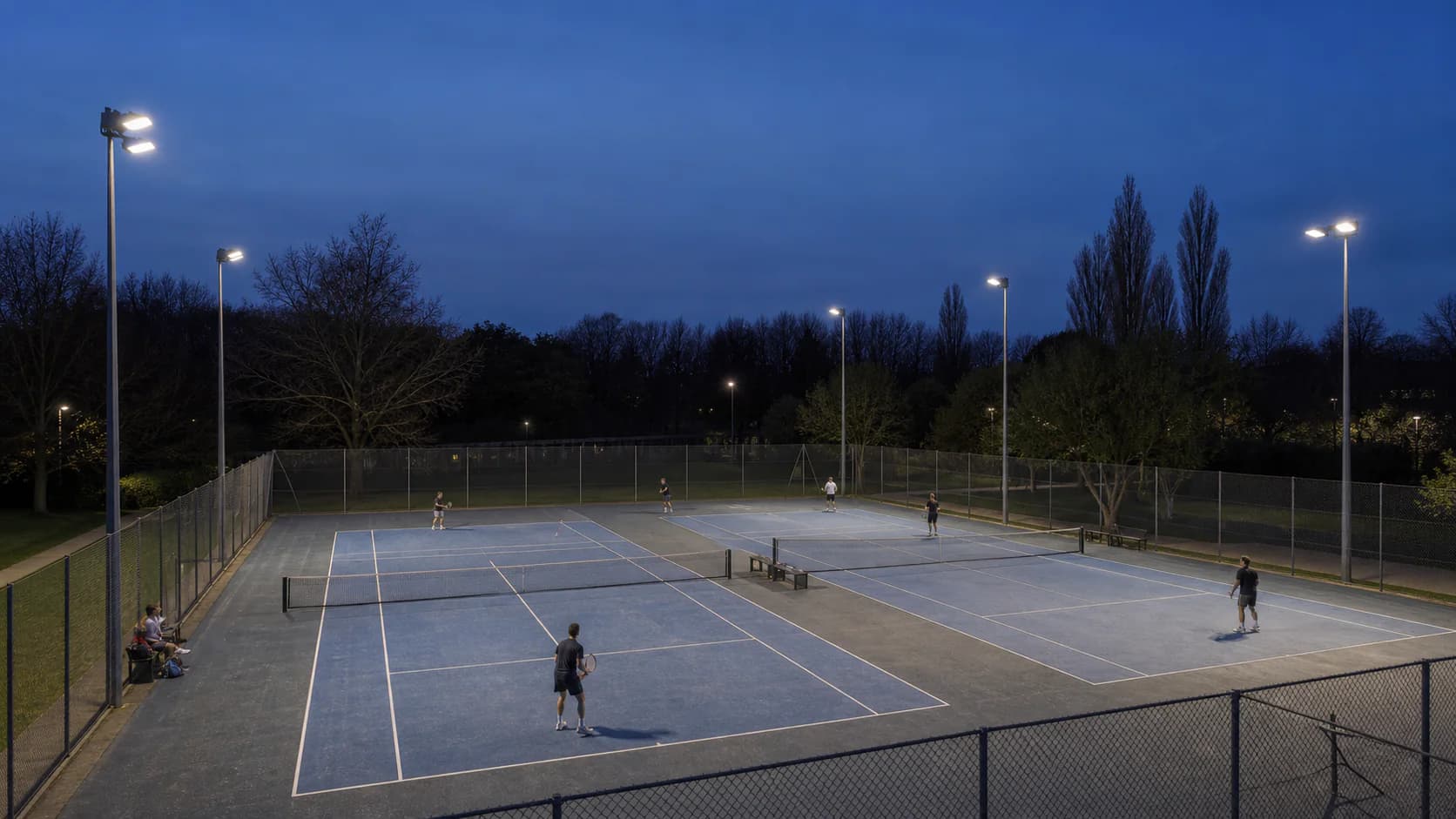
LED tennis court lighting is a side-mounted projector system planned around court markings, playing level and repeated player sightlines. Good uniformity must not be achieved at the cost of direct glare.
Application pages
Start by confirming the site types that belong on this path and the cases that need a different solution.
Sports lighting
A useful specification balances visual performance, reliability, operating cost and the realities of installation.
The distribution supports tracking a fast ball against the playing surface and surrounding background instead of maximising lumens outside the area that matters.
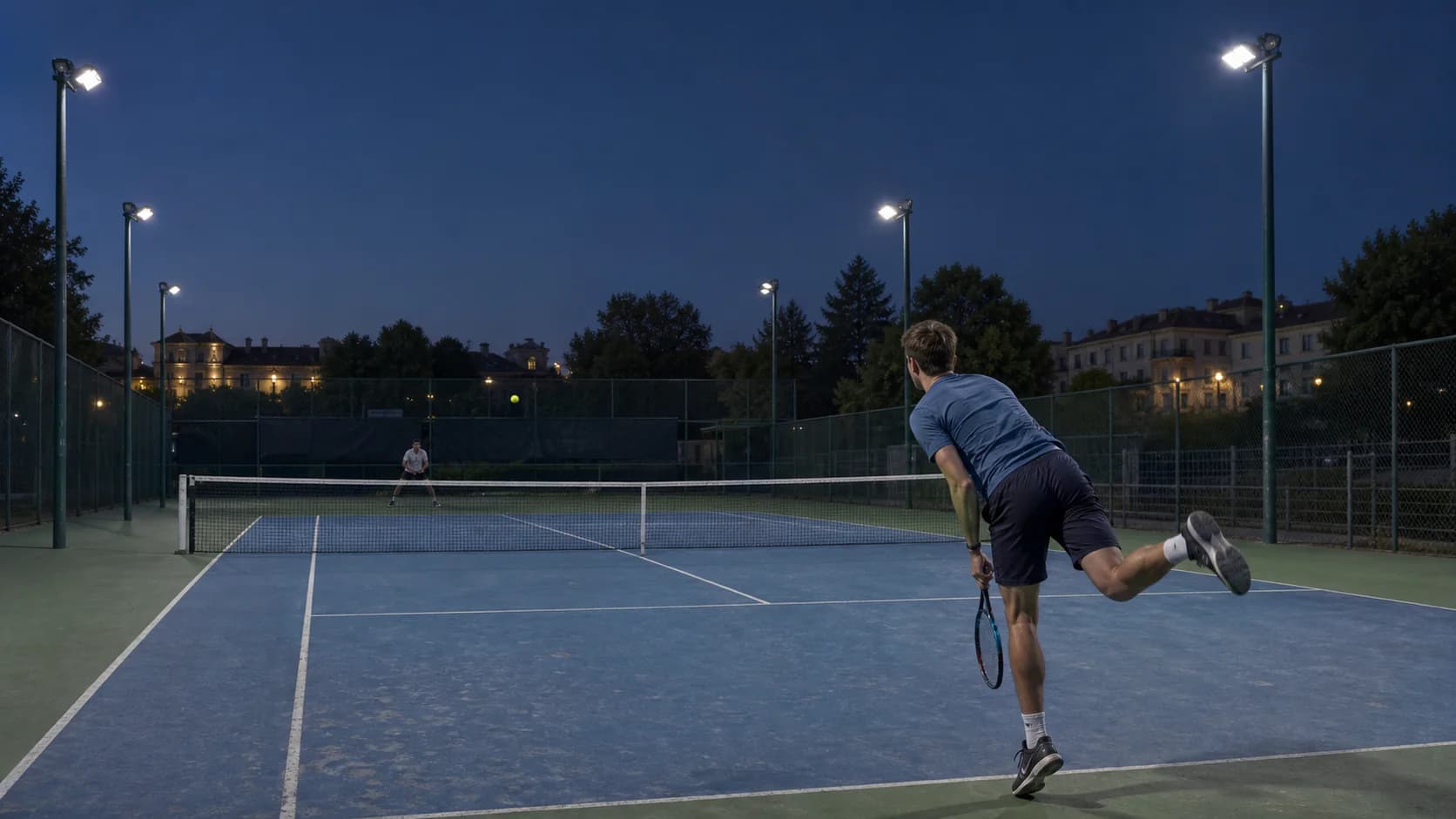
Position, optics and aiming account for users and players serving, looking across the net and following high trajectories.
Controls, environmental conditions and maintenance access are part of selection rather than an afterthought after pricing.
The result connects targets, visible assumptions, the proposed variant and evidence the project team can check.
Commercial investigation · sports field lighting
These are the decisions that shape fixture selection, photometric work and the final quote assumptions.
| Design criteria | Design approach |
|---|---|
| Court arrangement | Map playing lines, orientation, run-off zones, fences and spacing between courts before positioning poles. |
| Playing level | Set maintained illuminance and uniformity from recreational, training or competition use and local requirements. |
| Pole setbacks | Check safe placement, mounting height and lateral distribution so fixtures do not sit in critical player sightlines. |
| Glare | Test service, baseline and net-direction views where players repeatedly look toward elevated luminaires. |
| Adjacent courts and boundaries | Coordinate switching and aiming across grouped courts while controlling spill beyond fences and into neighbours. |
Design criteria
Use these comparisons to narrow the system direction before choosing an individual model.
Design criteria
Applicable targets depend on the country, site and project class. Final compliance must be checked against the current project brief and calculation.
Explore the solution family
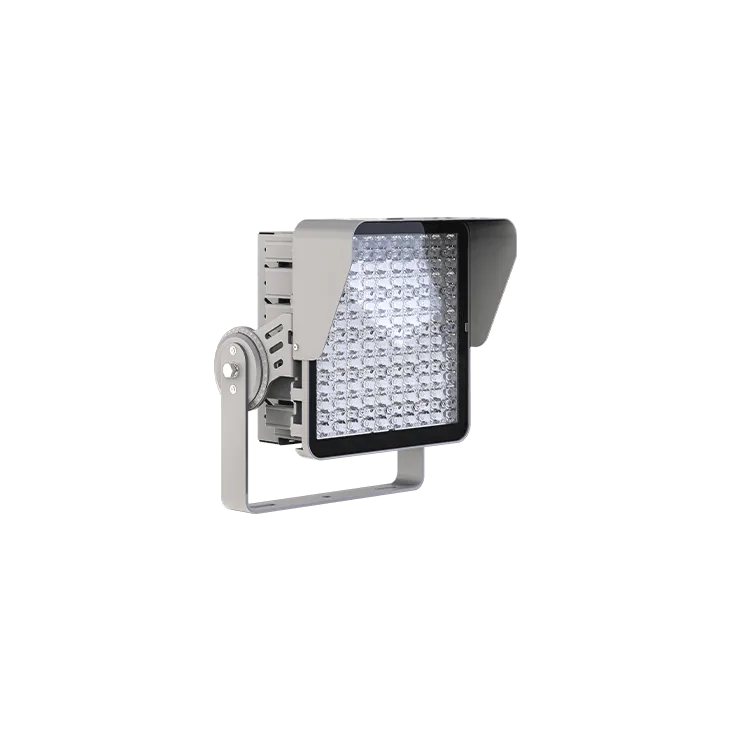
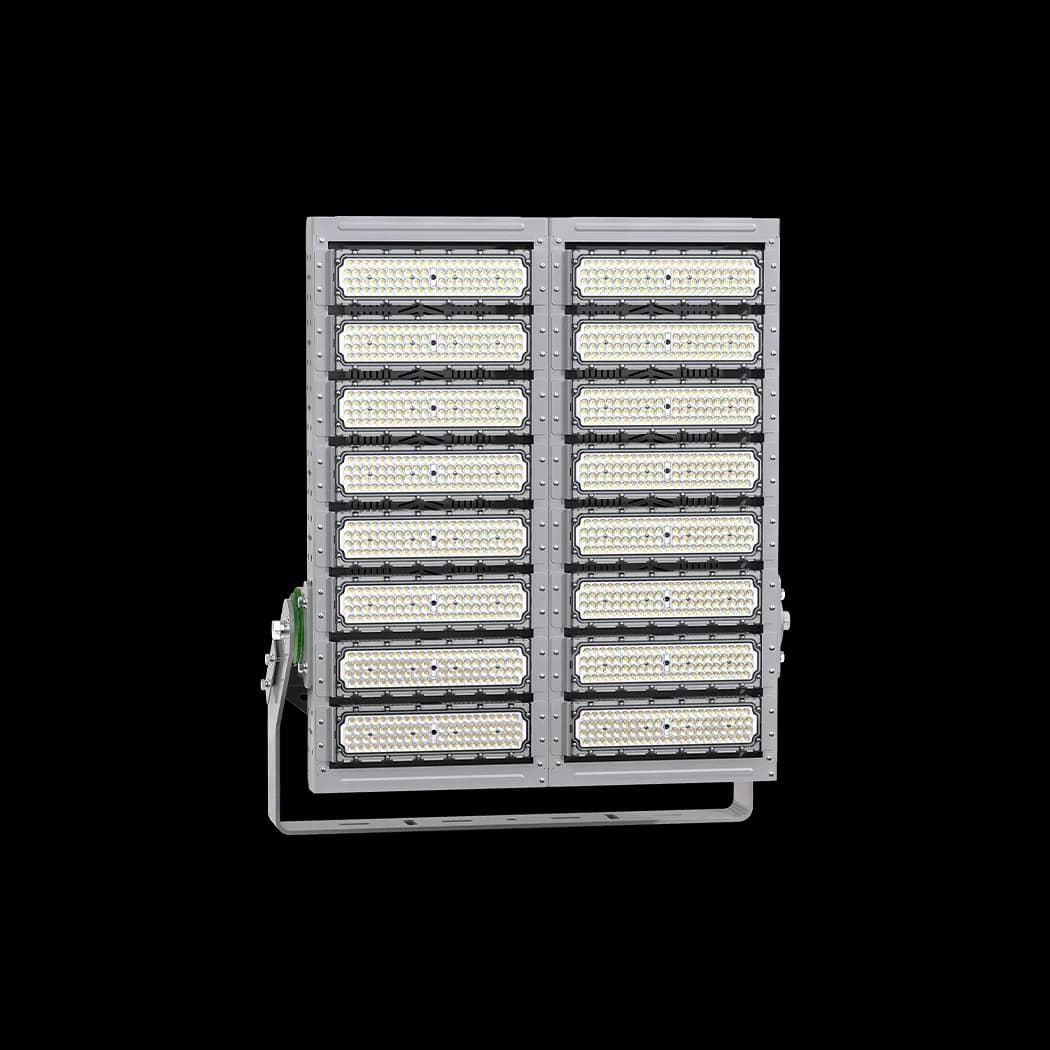
Published DinaLED models are shown only where the current product data supports this application direction.
 sports-area-lights
 sports-area-lights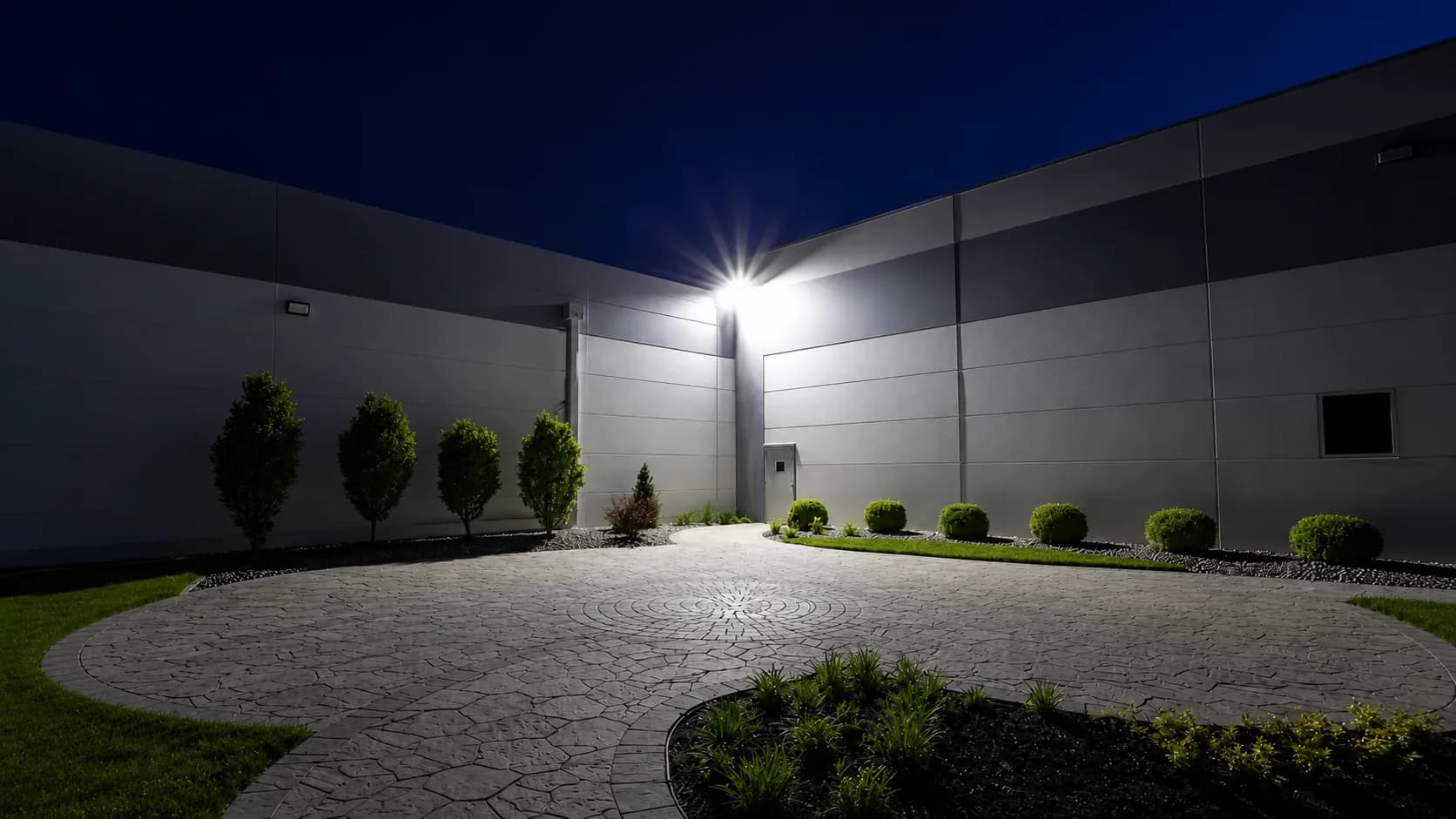
An outdoor-lighting route for large areas where pole positions, aiming, site boundaries and neighbouring users matter as much as fixture output.
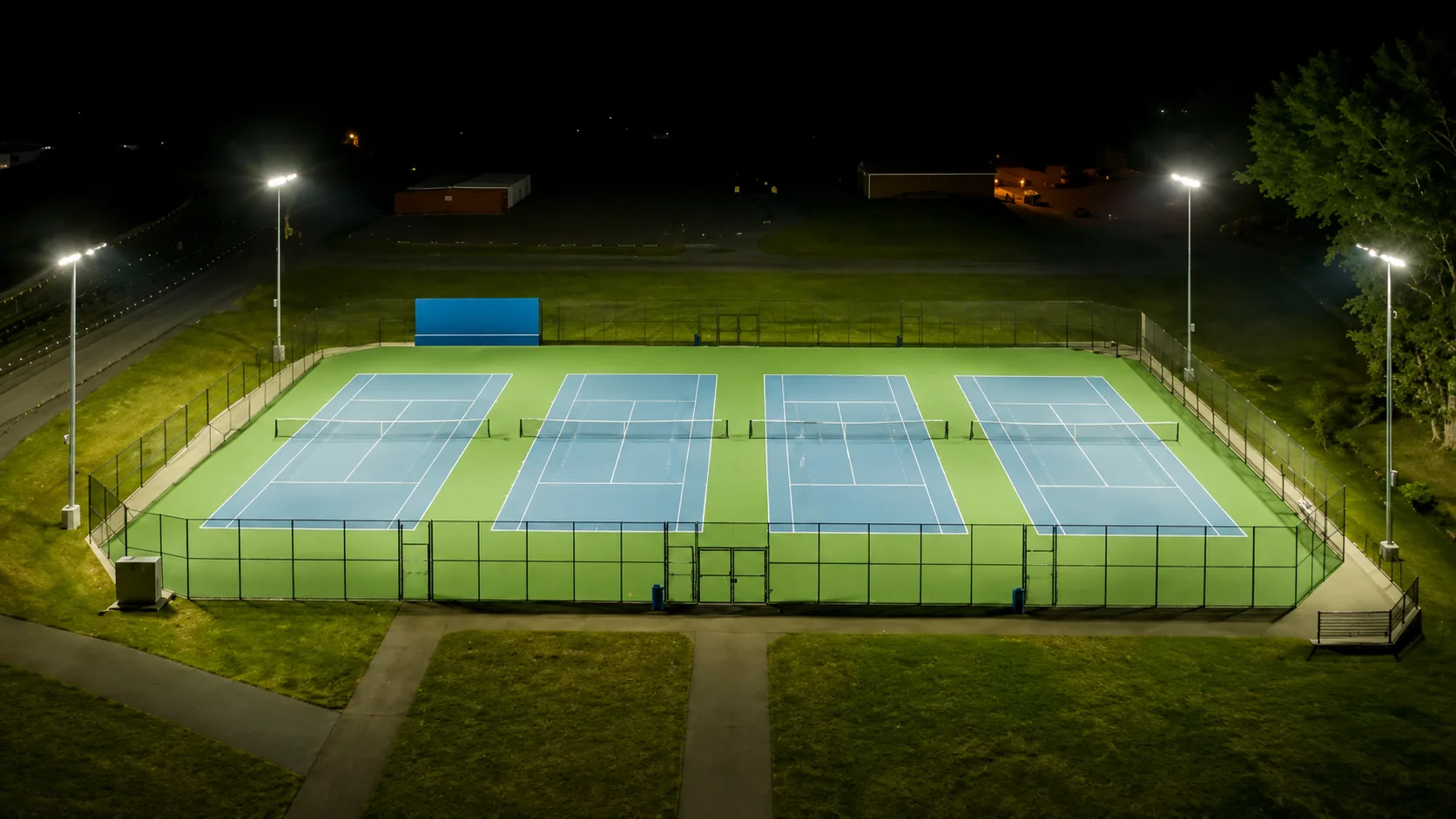
A project route for outdoor playing areas where the level of competition, mast geometry, uniformity and player sightlines govern the lighting system.
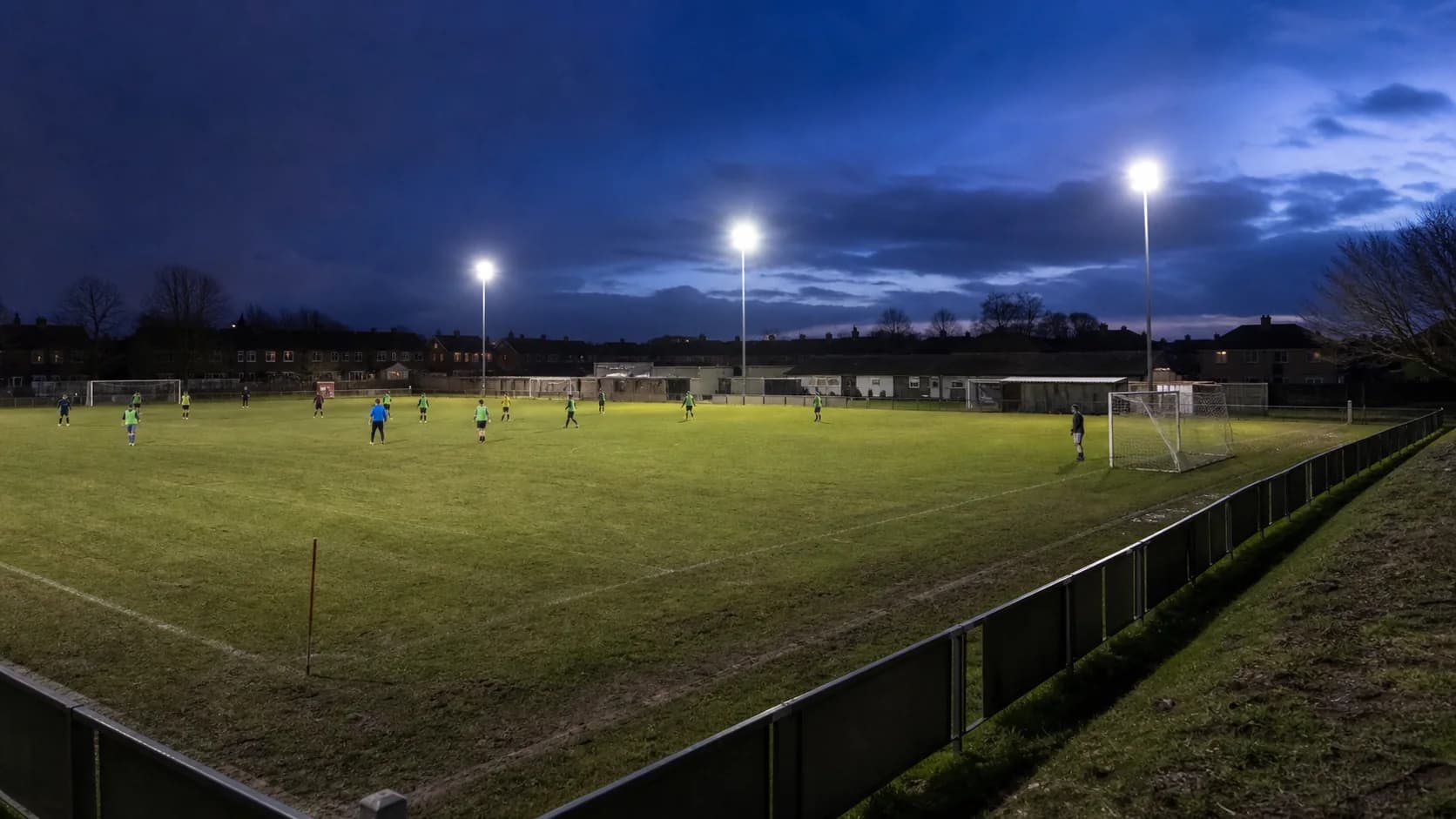
Football lighting planned from the competition level, marked pitch and available masts, with player glare and boundary spill tested alongside uniformity.
FAQ
Court lighting that supports fast ball tracking with pole positions, lateral distribution and player sightlines designed for single or grouped courts.